
Tabletop Tees
What started as a personal frustration turned into a proper brand build. Systems that do the heavy lifting so you can focus on what moves the needle.
How it started
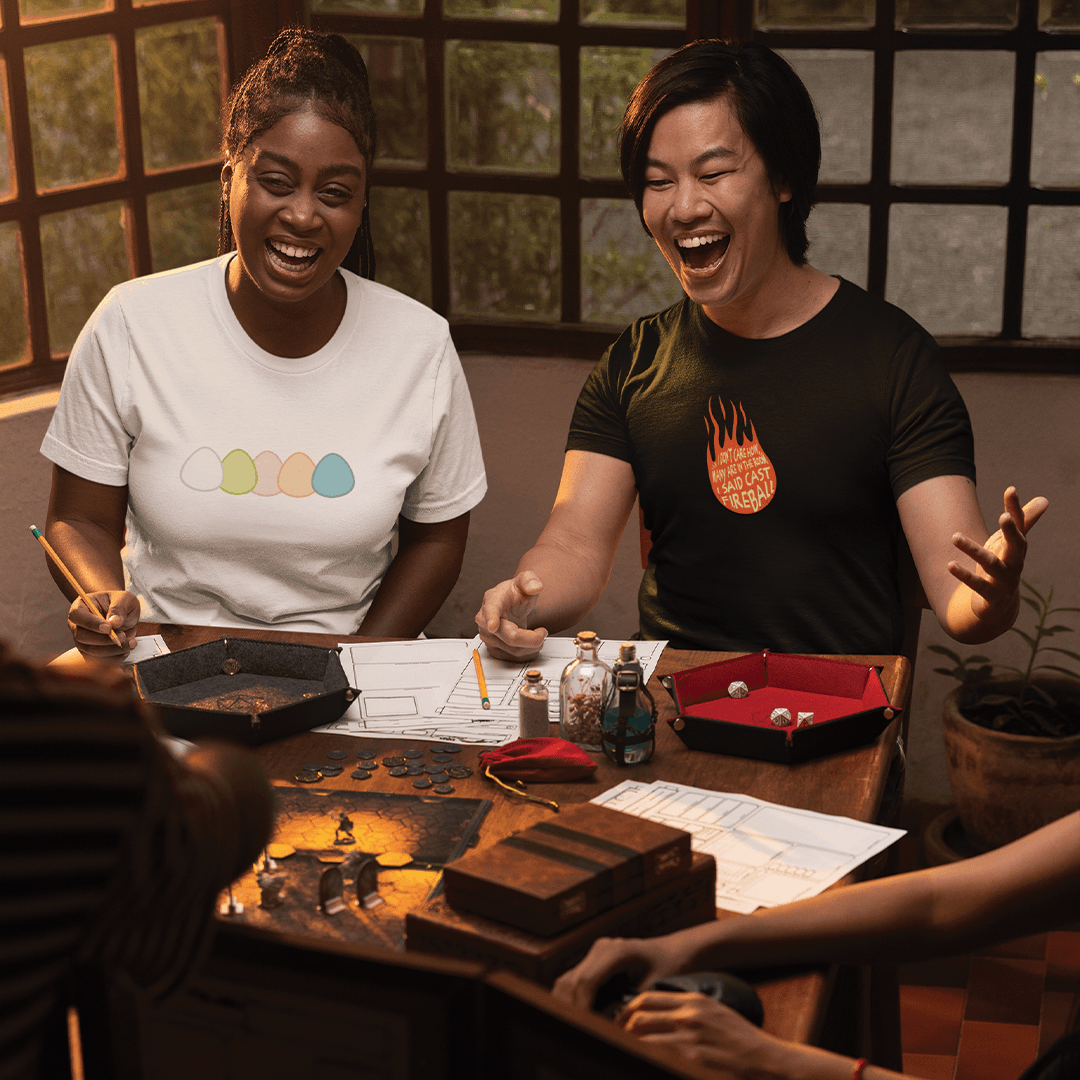
My friends and I love playing DnD and wanted a way to dress up for it without going full medieval. There was next to nothing that we liked so that's how Tabletop Tees was born.
Running a product business solo means you're the designer, the marketer, the copywriter, and the analyst all at once. The only way to make that sustainable is to build systems that do the heavy lifting so you can focus on the decisions that actually move the needle.
The goal was simple: generate consistent sales without the business demanding my attention every day.
Built from scratch
Building Systems
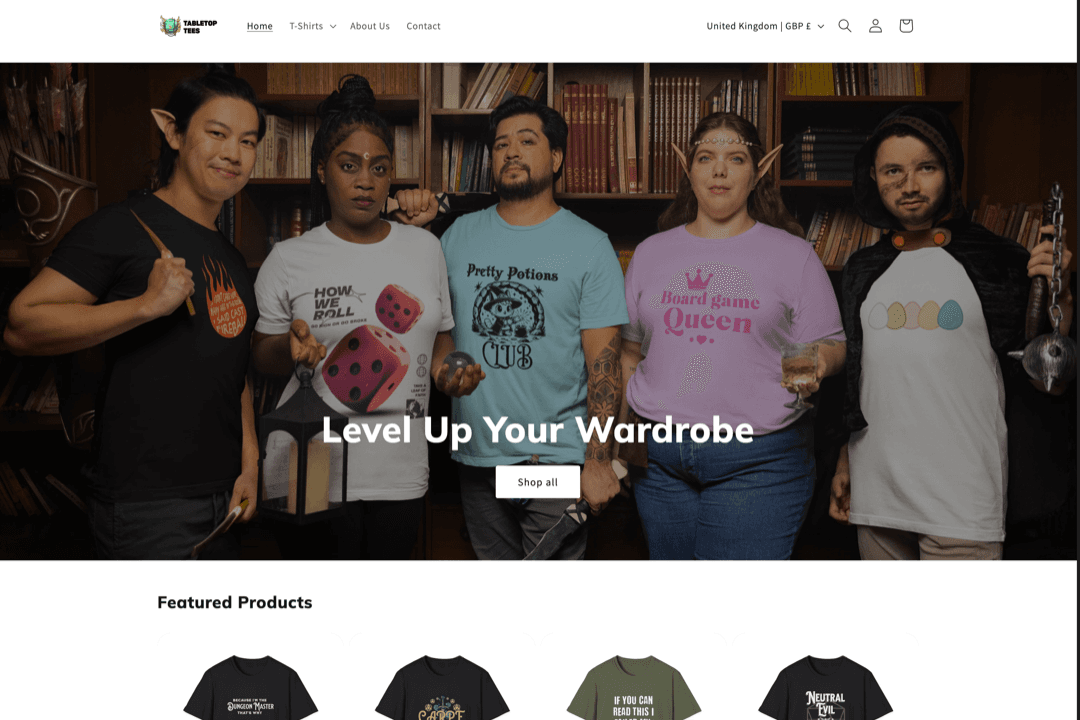
I started with the brand. Before any designs went near a blank canvas, I spent time mapping out who the customer actually was. Not just "DnD players" but the specific kind of person who wants to wear their hobby without it looking like a costume. That research shaped the visual identity, the tone of voice, and the product direction.
For product development, I built a process around speed and feedback. Every week I'd launch a batch of new designs, track what got traction, and feed the winners back into the next batch. Over time the range got sharper because the data was telling me exactly what people wanted to buy.
Mark Delgado
- Age
- 35
- Education
- Bachelor's in Computer Science
- Status
- Married
- Occupation
- Senior Software Developer
- Location
- Austin, Texas
- Disposable Income
- Medium-High
Bio
Mark lives in Austin and works remotely as a senior software developer for a SaaS company. Outside of work he spends a lot of time in the tabletop gaming world. He hosts weekly board game nights, runs a Dungeons & Dragons campaign, and stays active in online gaming communities.
Mark likes clothing that subtly signals his hobbies without looking overly "geeky", so he's drawn to apparel that references gaming culture in clever or stylish ways rather than obvious graphics.
Core needs
- Apparel that references tabletop culture without looking childish or overly nerdy.
- Unique designs that feel like insider jokes for gamers.
- High quality shirts that hold up during long game nights.
Frustrations
- Most "gamer" clothing looks cheap, loud, or overly cartoonish.
- Limited variety, many stores repeat the same obvious DnD jokes.
- Poor shirt quality or prints that fade after a few washes.
Meta Ads
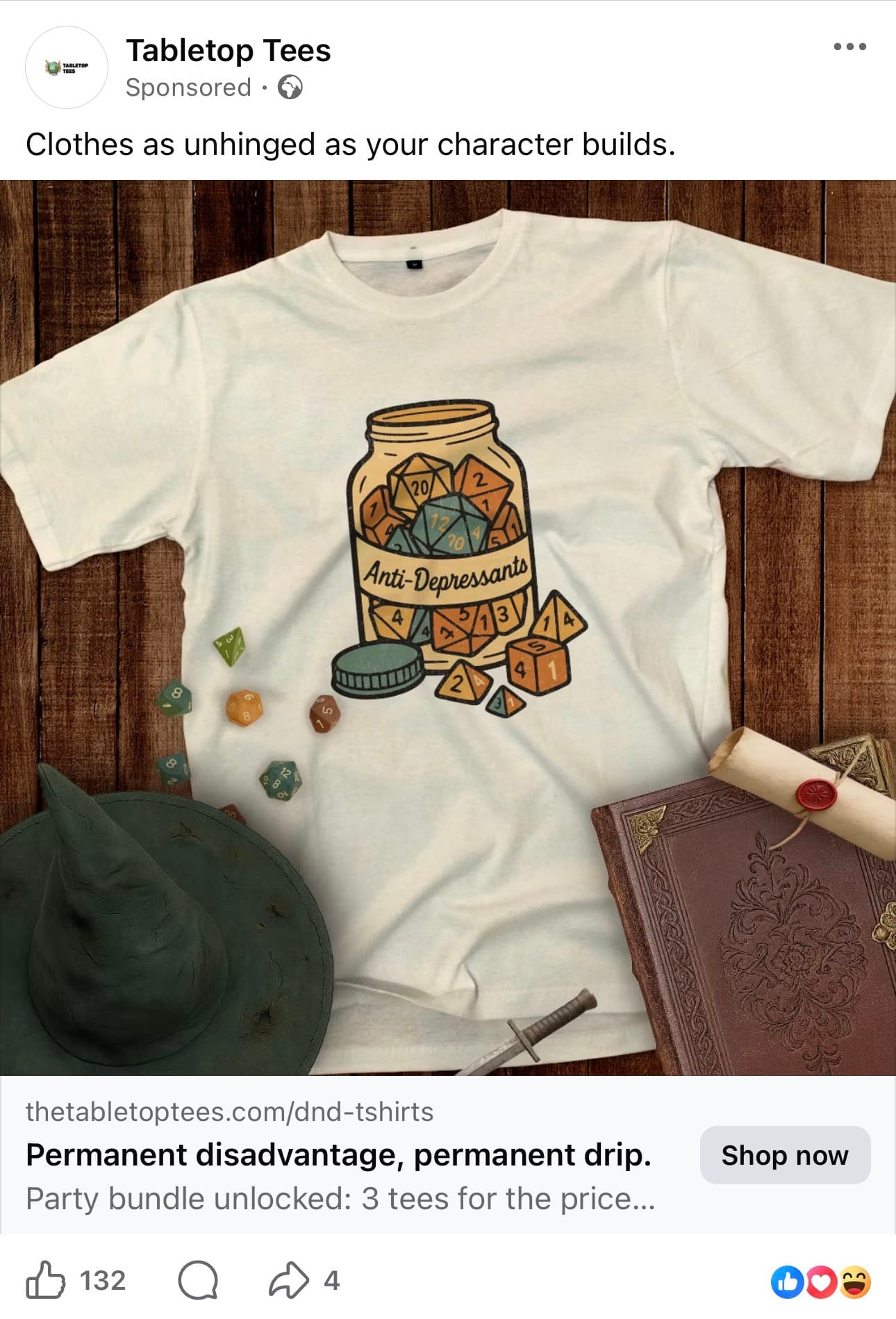
On the marketing side I set up a Meta Ads funnel to bring in cold traffic, testing different creatives and audiences until I found what converted. The campaigns peaked at a 2.5x ROAS during the strongest windows.
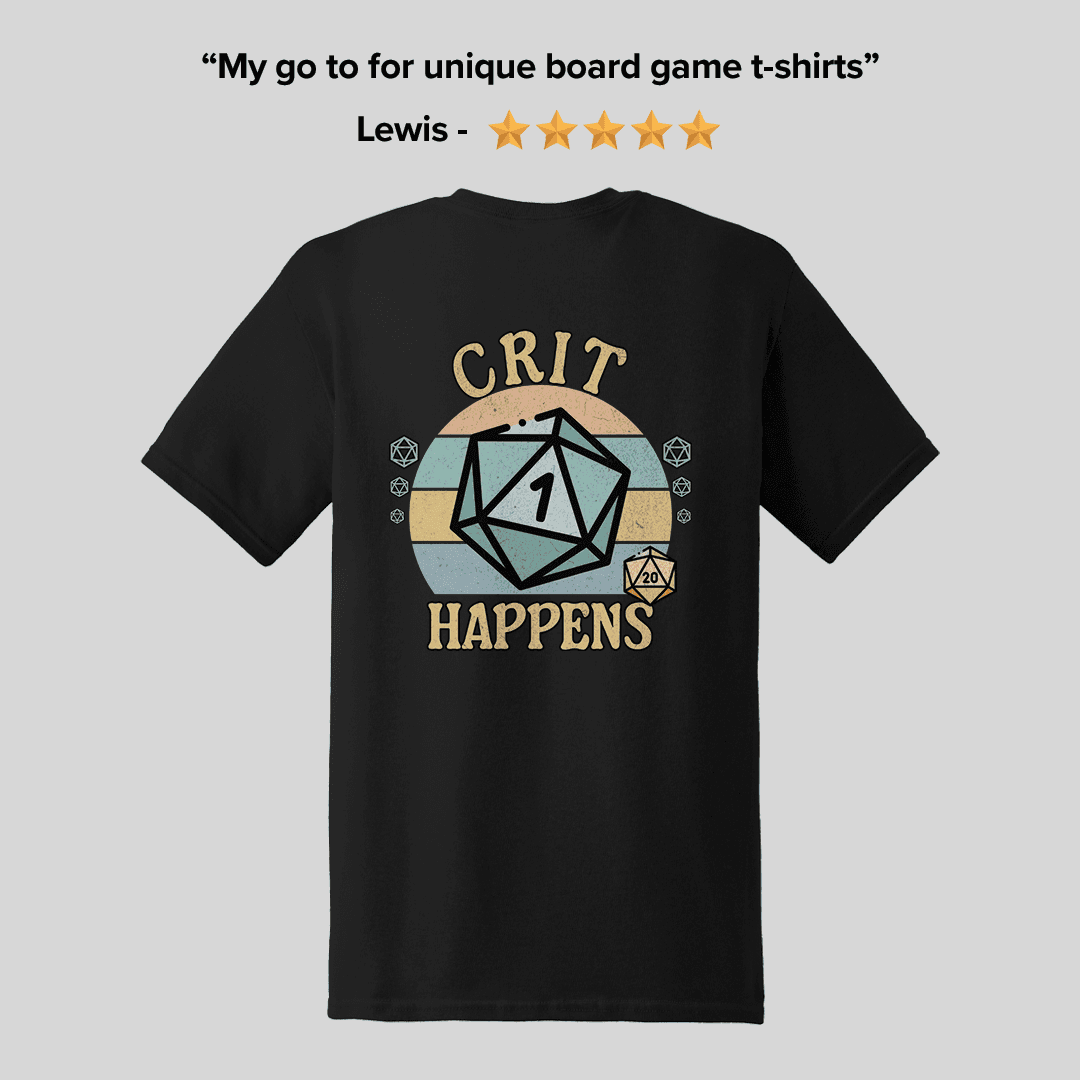
Every ad creative was built to stop the scroll first and sell second. I tested formats across lifestyle shots, product close-ups and meme-style creatives, and let the data decide what scaled. The winning ads all had one thing in common: they looked like something a friend would share, not something a brand would post.
Email marketing
Once someone came through the door, a set of Klaviyo email automations took over: a welcome sequence to introduce the brand, a browse abandonment flow to bring people back, a post-purchase sequence to drive a second order, and a win-back flow for anyone who'd gone quiet.
Each flow was written to feel like it came from a person, not a brand account. Open rates held at 40%, which reflects how well the flows are written and how warm the list stays between campaign periods.
Placed order
The prophecy foretold your arrival
Building legends, one tee at a time
Every tee tells a story
The results
Sales from cold start
Peak ROAS on Meta
Email open rates
Store conversion rate
Like most business owners, I have more on my plate than hours in the day. Tabletop Tees runs in focused bursts rather than continuously. The reason it still produces results when I pick it back up is that the foundations are solid. The brand is clear, the automations are running, and the ad frameworks are ready to go.
You don't need to be everywhere all the time if you've built the right things in the right order. That's the same approach I bring to client work.
Tools used
Want a strategy like this?
Book a Free Call
Want results like these?
Book a free 30-minute strategy call. No obligation, no pitch deck.